Interactive audiovisual system — live performance version
Victory Boogie Woogie
PIET MONDRIAN
music - “Vine Street Boogie” Composer: Jay McShann
Victory Boogie Woogie — the last unfinished work, left incomplete when Mondrian died in 1944. This interpretation treats the piece as a missing loop rather than a restoration.
This project is a live audiovisual performance built around a custom TouchDesigner system.
The original Mondrian composition was reconstructed manually as a modular grid structure inside TouchDesigner. Each geometric element was rebuilt as an individual unit.
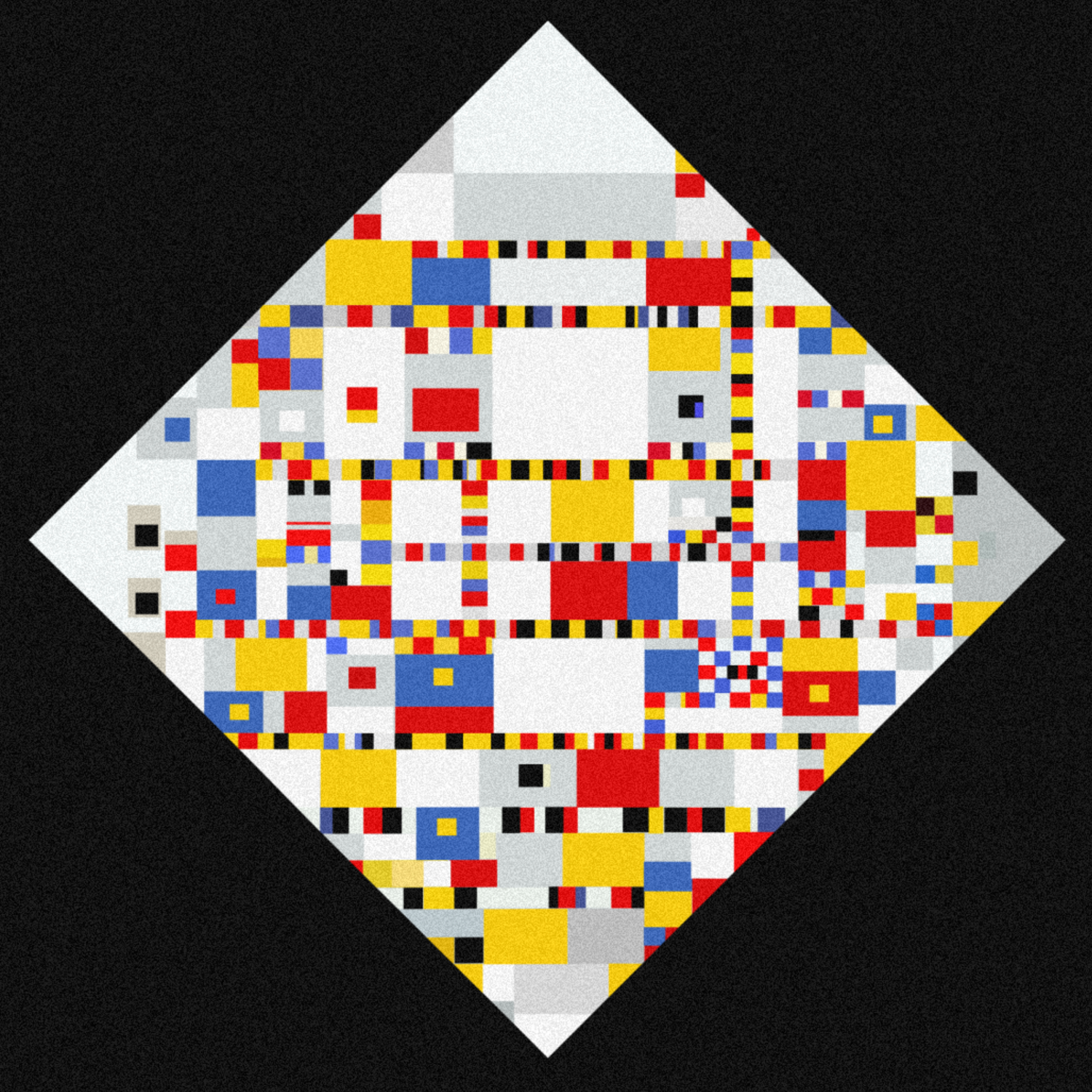
The visuals respond to live MIDI input from a piano performance. Every note triggers structural transformations within the reconstructed composition.
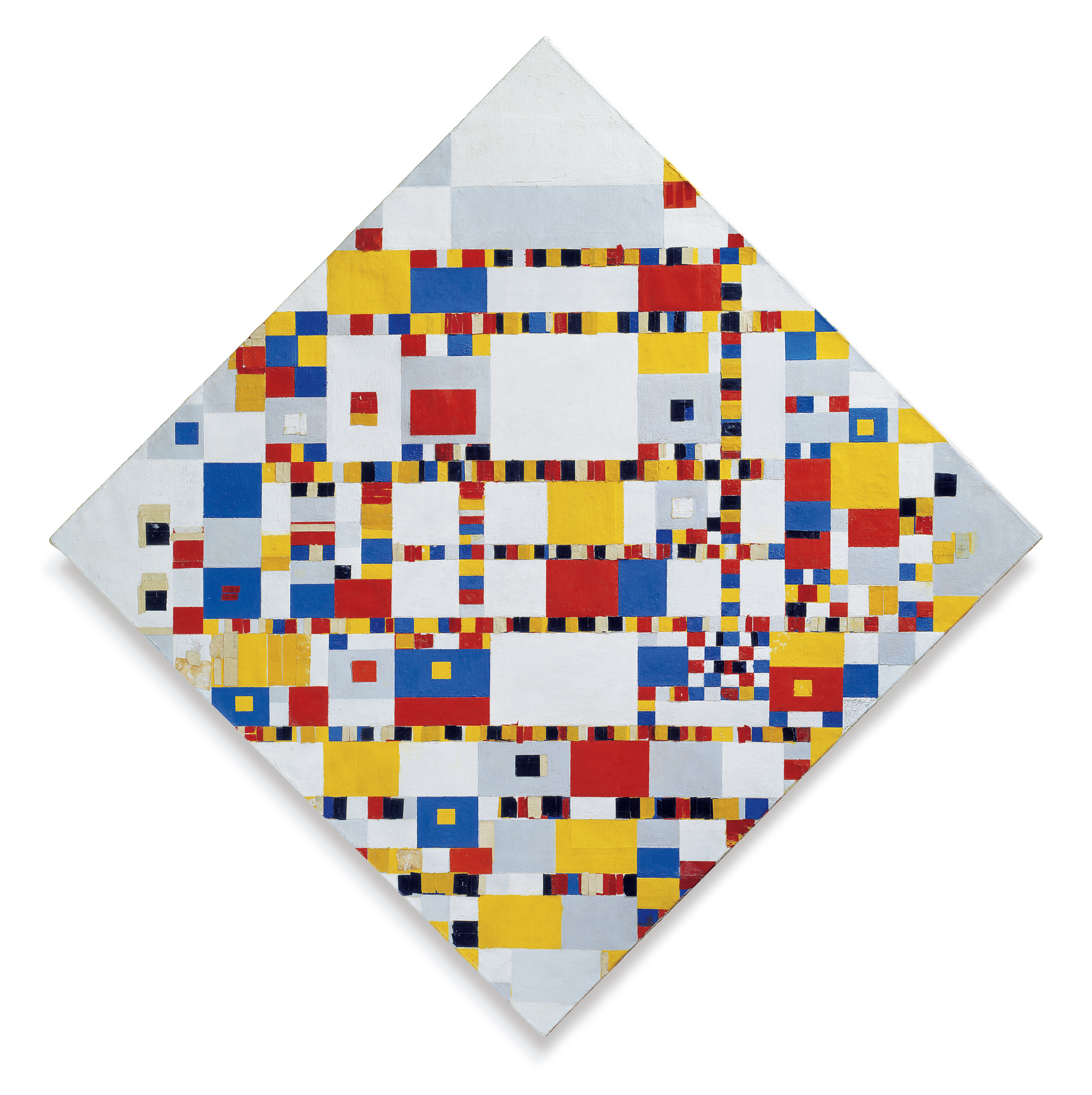
Original painting by Piet Mondrian
This project takes that translation one step further. The composition is reconstructed as a rule-based system in TouchDesigner, and the musical layer is not only referenced but reintroduced as an active force. The piano performance provides real-time input that alters the visual field, allowing rhythm to reorganize the grid as it unfolds. In this way, the structural logic of boogie is not only represented but enacted, bringing the painting’s underlying musical principle back into motion.
Mondrian placed boogie at the center of his late work, not as a decorative reference but as an underlying principle. Boogie is built on a clear internal division: the left hand maintains a steady, almost mechanical pulse, while the right hand moves more freely, introducing variation, syncopation, and ornament. The rhythm is strict, yet within it there is space for play. Structure and movement coexist without cancelling each other.
Victory Boogie Woogie translates that musical condition into visual form. The grid holds the composition together like the persistent rhythm in the left hand, while the shifting blocks of color introduce displacement and variation, closer to the improvisatory gestures of the right hand. The painting does not simply illustrate music -it absorbs its internal logic and rearticulates it through geometry.
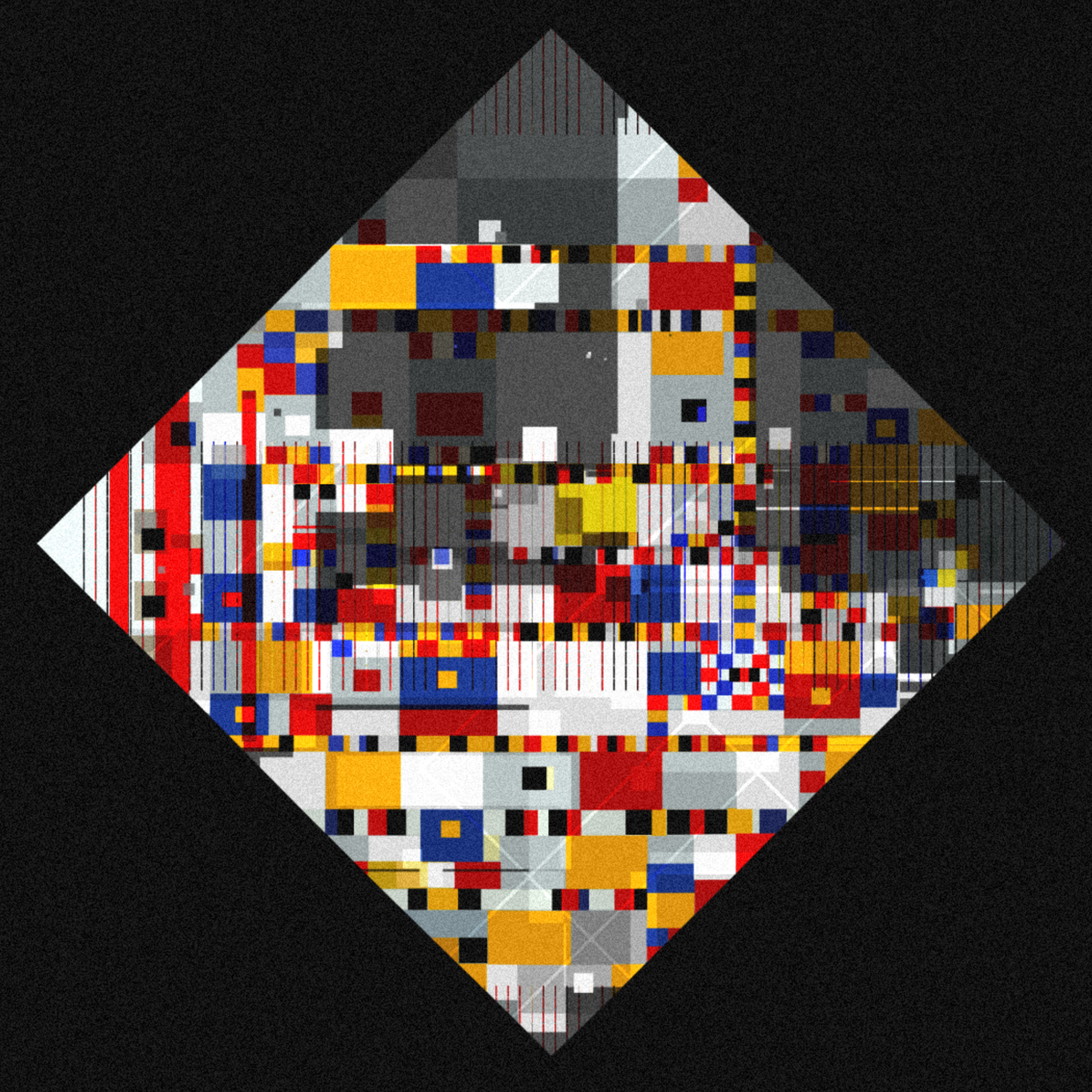
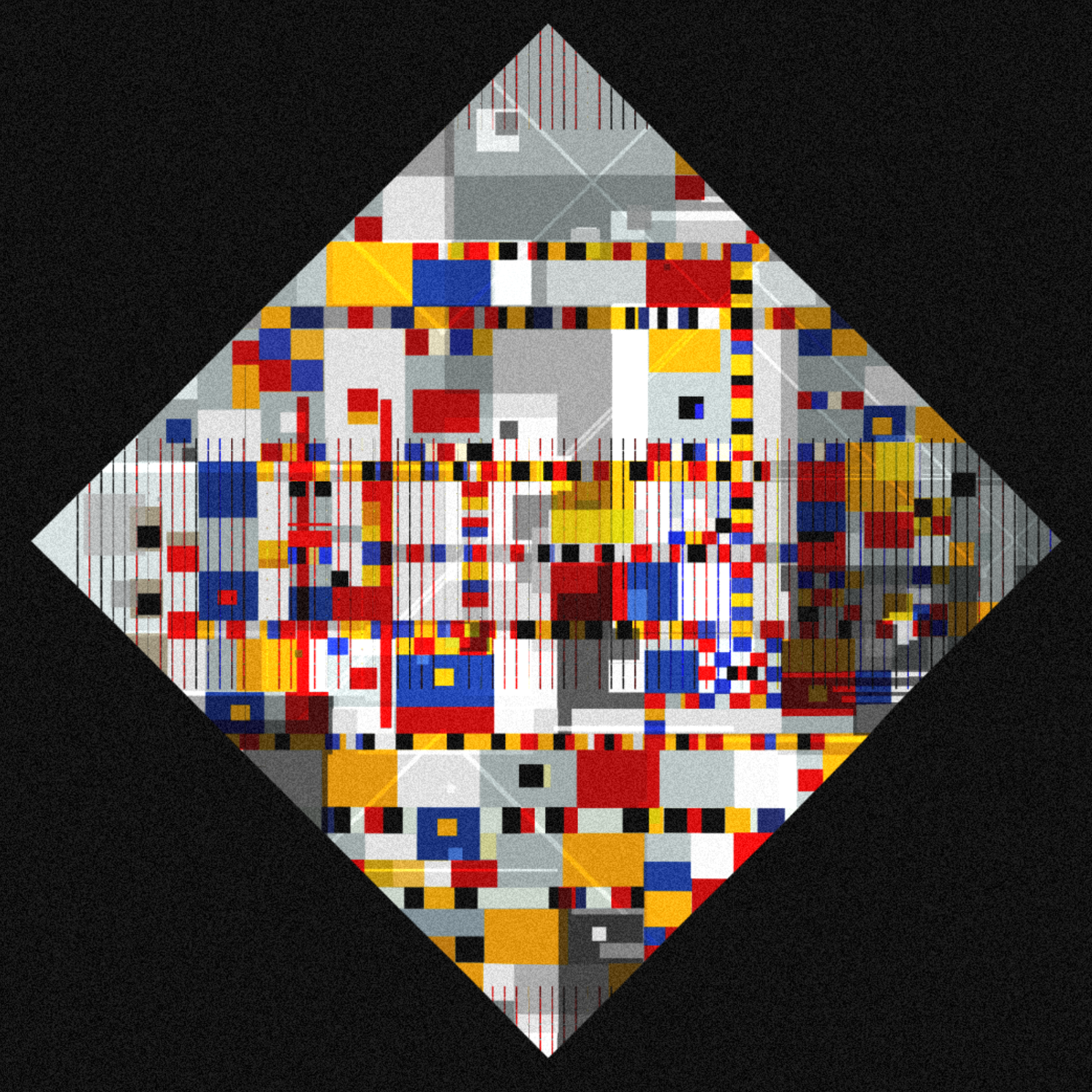
Although the digital environment allows for perfect geometric precision, the system deliberately introduces a layer of disruption. In the painting, irregularities are inseparable from the material process — edges shift, and brushstrokes remain visible. Colors are visibly adjusted, surfaces carry traces of revision. In a computational space, such instability is not given but chosen.
The additional mask and glitch layer do not imitate physical imperfection; they function as an intervention within the algorithm itself. Rather than simulating texture, this gesture interrupts digital smoothness and prevents the composition from becoming fully sealed or sterile. The result is not a reproduction of painterly roughness, but a conscious act inside a rule-based system.
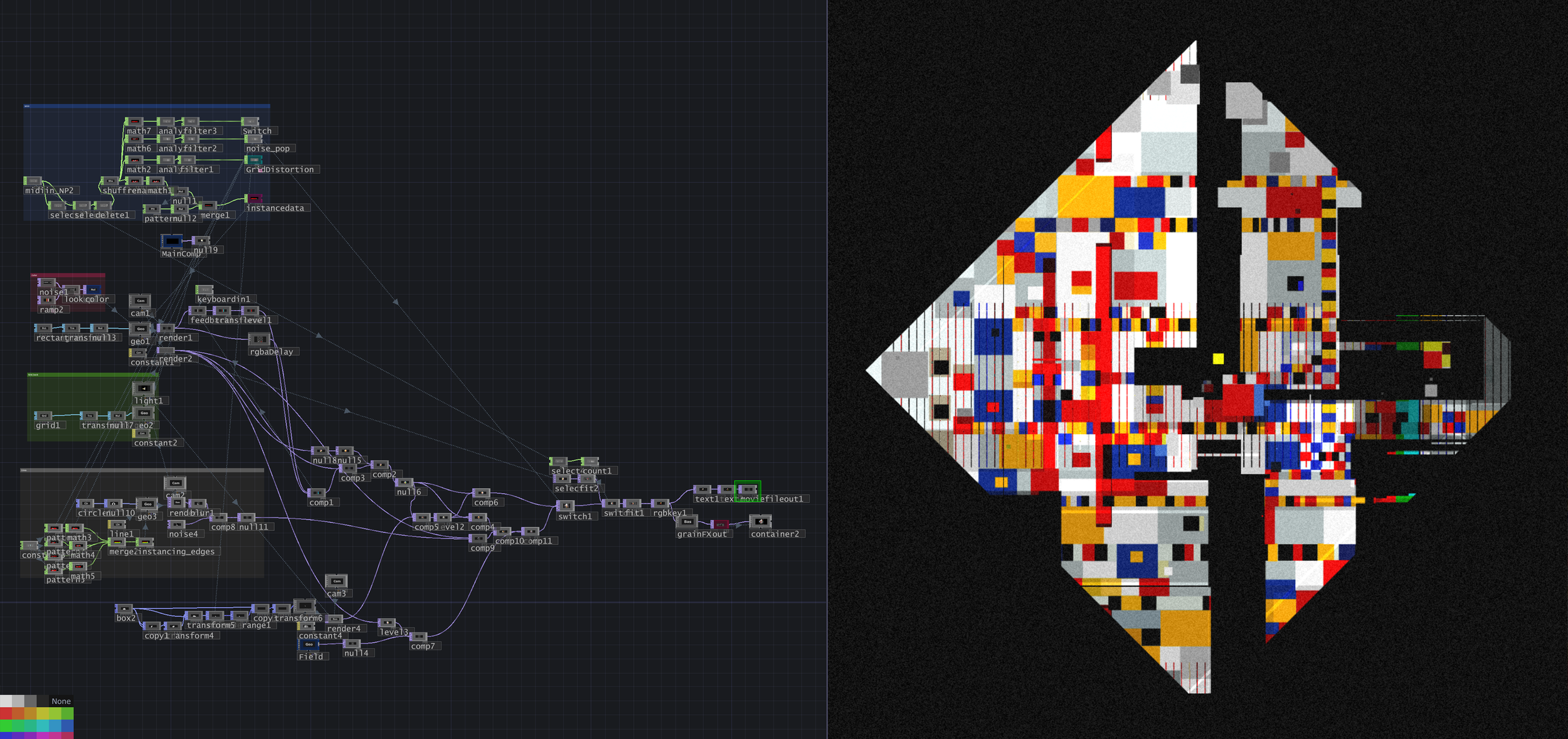
Touchdesigner patch
Reconstructed composition built from modular geometric elements in TouchDesigner
Real-time MIDI input from piano mapped to visual parameters
Feedback and masking layers introducing temporal variation and depth
Live output projected during performance