Live audiovisual performance — real-time audio-reactive projections (TouchDesigner) and live piano
The girl from ipanema

In Seminar XI (1964), in the section “Of the Gaze as Objet Petit a”, Lacan tells a story from his youth. As a young intellectual who wanted to take part in something practical and physical, he spends time in Brittany, where he goes out to sea with fishermen. One day one of the fishermen, Petit-Jean, points at a small sardine can in the sea, glinting in the sun. He says to Lacan: “You see that can? Do you see it? Well, it doesn’t see you!” The fisherman found this very funny; Lacan, at that moment, somewhat less so.
In that same year, 1964, when Lacan is giving his Seminar XI, Stan Getz and João Gilberto release one of the most famous jazz records, on which “The Girl from Ipanema” is performed. The popular reading leaves the song with the air of an uncomplicated romantic story, with various nuances across its versions in many languages. This work offers the viewer a reading through a historical parallel with the seminar, which came out in the same year as the record.

The girl here is not equated with the tin can, but occupies the same position. The question of whether the can knows it is being looked at remains unanswered: its indifference to the one who looks is only its glint in the sun. Everything the song presents as beautiful and elevated — the girl, Rio on old film, the famous jazz standard — is replaced at the end by glittering rubbish in the water, which places the viewer in the picture
The work, however, is not an illustration of a Lacanian concept, but repeats the same story from the other side. In the boat, it was Petit-Jean who found it funny, while Lacan was the one laughed at, and the one who later gave the explanation. In this work the viewer takes Lacan’s place in the boat, and the work itself takes the side he did not get to that day.
Note: the author of the original Portuguese lyrics about the girl from Ipanema and the narrator’s lack is Vinicius de Moraes, who was married nine times.
Norman Gimbel’s English lyrics, which are considered as significant as the Portuguese original because Astrud Gilberto sings the verse on the original recording, detachedly, precisely in English, end on the line “No, she doesn’t see”. The song’s narrator looks at the girl and sees her as an object, while the girl walks past and does not look at him. The girl’s indifference at the end of the verse, shown through the phrase “not at me”, is inscribed by the narrator himself, while nothing is known about the girl herself — whether she knows she is being looked at, whether she is absorbed in her own thoughts — all of this remains an unresolved riddle. She is merely in the field of the gaze, and the narrator describes her: tall, young, tanned and lovely. He tries to make her his picture, the object of his gaze, and complains to the listener that she, for her part, does not notice him. The narrator wants her to become the eye that sees him, and at the same time to be the owner of the picture. But the line itself, in this case, though literally true, is in essence false. The girl, like the sardine can in Lacan’s story, is a point of light. The can has no eye, it does not see, but it glints in the sun, illuminating the one who looks at it. The one who looks, who thinks he is the eye before which the picture stands, is in fact himself in the picture, in which he is a stain: Lacan — as a young intellectual in a boat with fishermen who have no time for him, and the song’s narrator, for whom the girl has no concern. She looks all the time, giving the gaze in excess, but not sight.
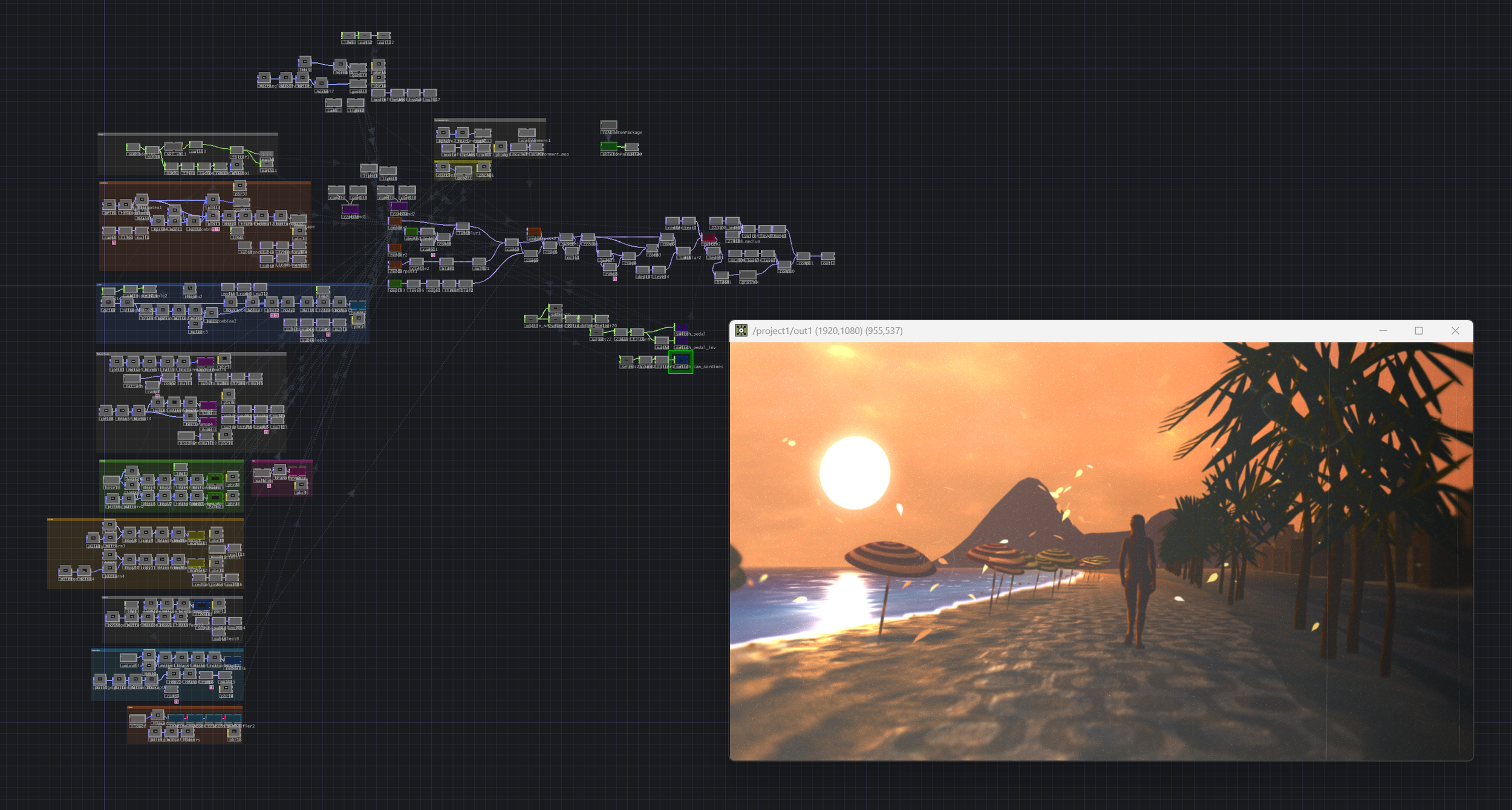
Touchdesigner setup

All visuals are built in TouchDesigner and run in real time: nothing is pre-rendered in advance. The scenes are computed during the performance and hold at least 50 FPS despite their complexity.
The drums and an additional marimba layer are built in Ableton Live and connected to TouchDesigner via TDAbleton: the audio from Ableton drives the rhythm and the movement of the elements in the scene.
Scene changes are mapped to the Nord Piano pedals: the middle and left pedals switch scenes, while the right pedal remains the sustain, so as not to interfere with playing.
The piano is performed live, in a single take, without edits. The image is sent to a projector; the recording is made with a camera from behind.
Behind the scenes
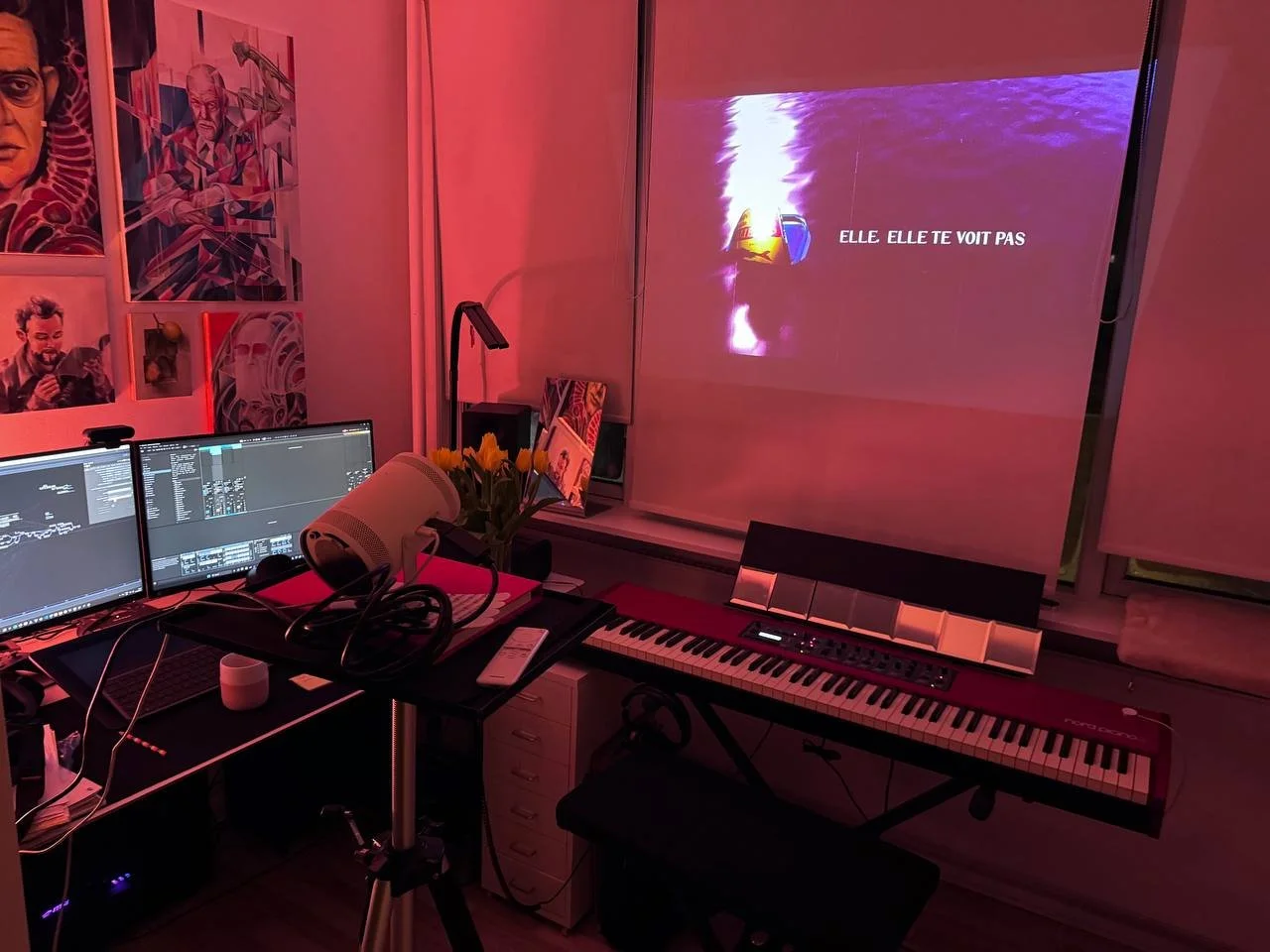
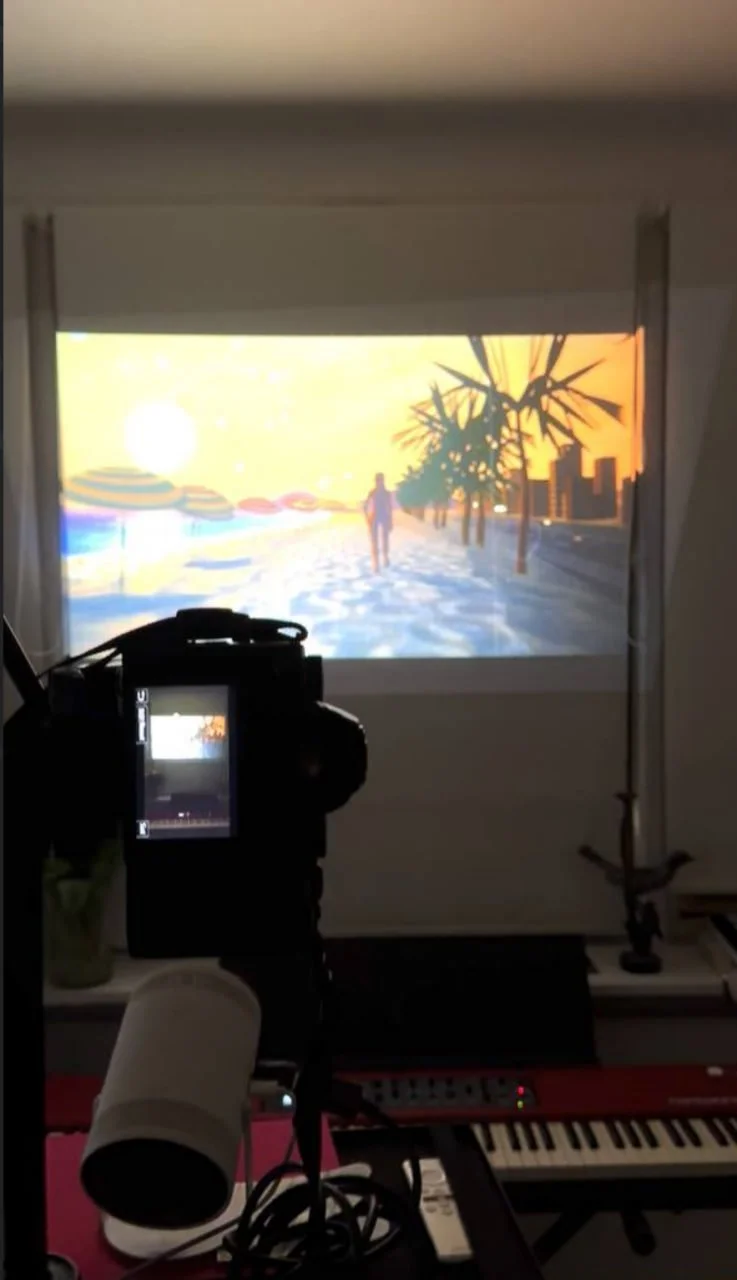
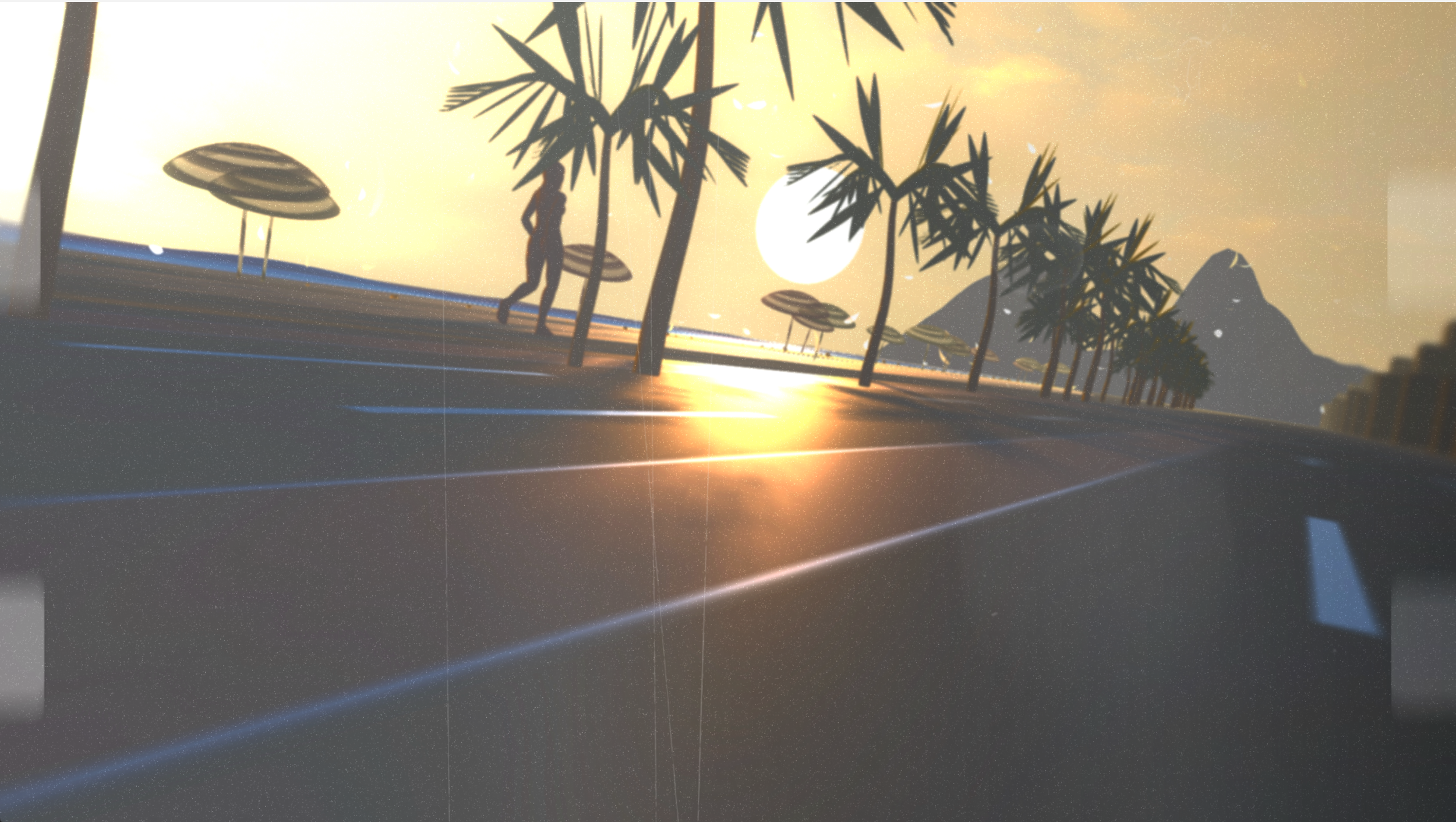
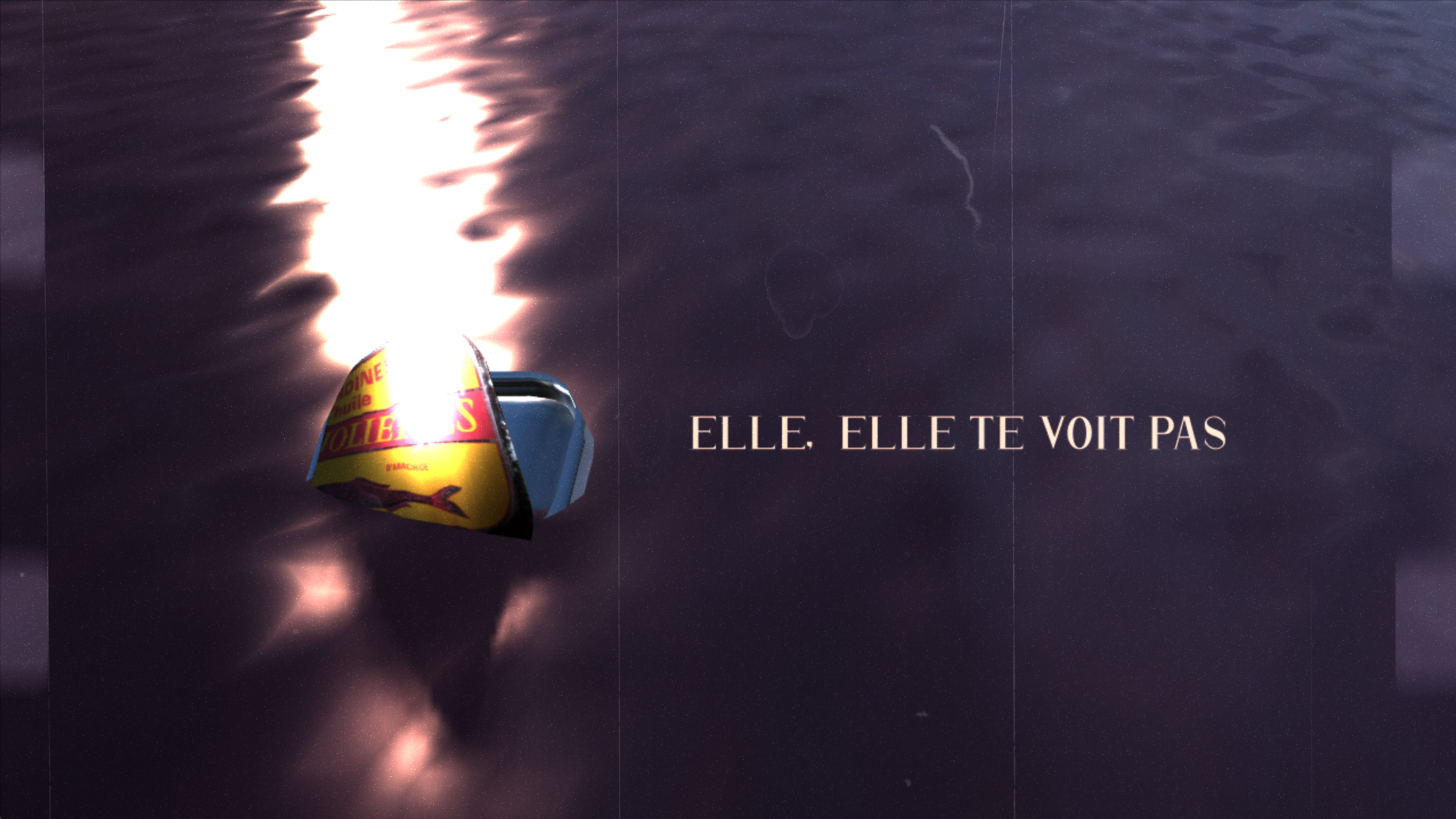
The parallel becomes still more visible in that Petit-Jean’s phrase “Elle, elle te voit pas” and the song’s last line “She doesn’t see” differ only in address, since the fisherman speaks to Lacan through “you”. The last frame of the performance rests on the non-coincidence of these two lines. Before that frame, the viewer is shown a recording in which the girl walks along the promenade without turning around, while the melody, which in real time sets the rhythm and the movement of the elements of the scene, is played by the performer, seated with her back to the viewer. The melody and the words of the chorus are so well known that they are sung along silently and automatically, and the last line is “she doesn’t see”. The viewer is all the while in the place of the song’s narrator, since he looks, while no one looks at him. In the song, not-seeing is a lack on the side of the narrator; in Lacan’s story, the absence of sight is the gaze on the side of the object. The last frame of the performance takes the not-seeing, which throughout the recording was experienced as a lack through the narrator, and shows it from the other side. The place from which the viewer was not seen was looking at him all along, just as the tin can once looked at Lacan without seeing him. At the moment when the viewer involuntarily sings “she doesn’t see”, the complaint passes to him, but at the same time this complaint is laughed at, since for the fisherman in Lacan’s story the whole situation is a joke that says “you are nobody here”. Just like Lacan, who found himself out of place among the fishermen, the viewer is not in Rio and not in the sixties: he is only watching a recording that was not made specially for him.
Lacan says it directly: “You never look at me from the place from which I see you”, and the song echoes precisely this non-coincidence. In the projected frames of the present work, the girl walks against the sun, which makes her a silhouette, unreadable as an object, since she is on the side of the light.