TouchDesigner real-time interactive installation with RPLiDAR A1
c’est pour l’Autre
The video shows both direct hand input (detected by the LiDAR sensor) and standard mouse input for testing purposes. While this setup is limited in scale and lacks the immersive qualities of a large installation, it accurately demonstrates the interaction logic, the real-time response to touch, and the underlying principle of the work.
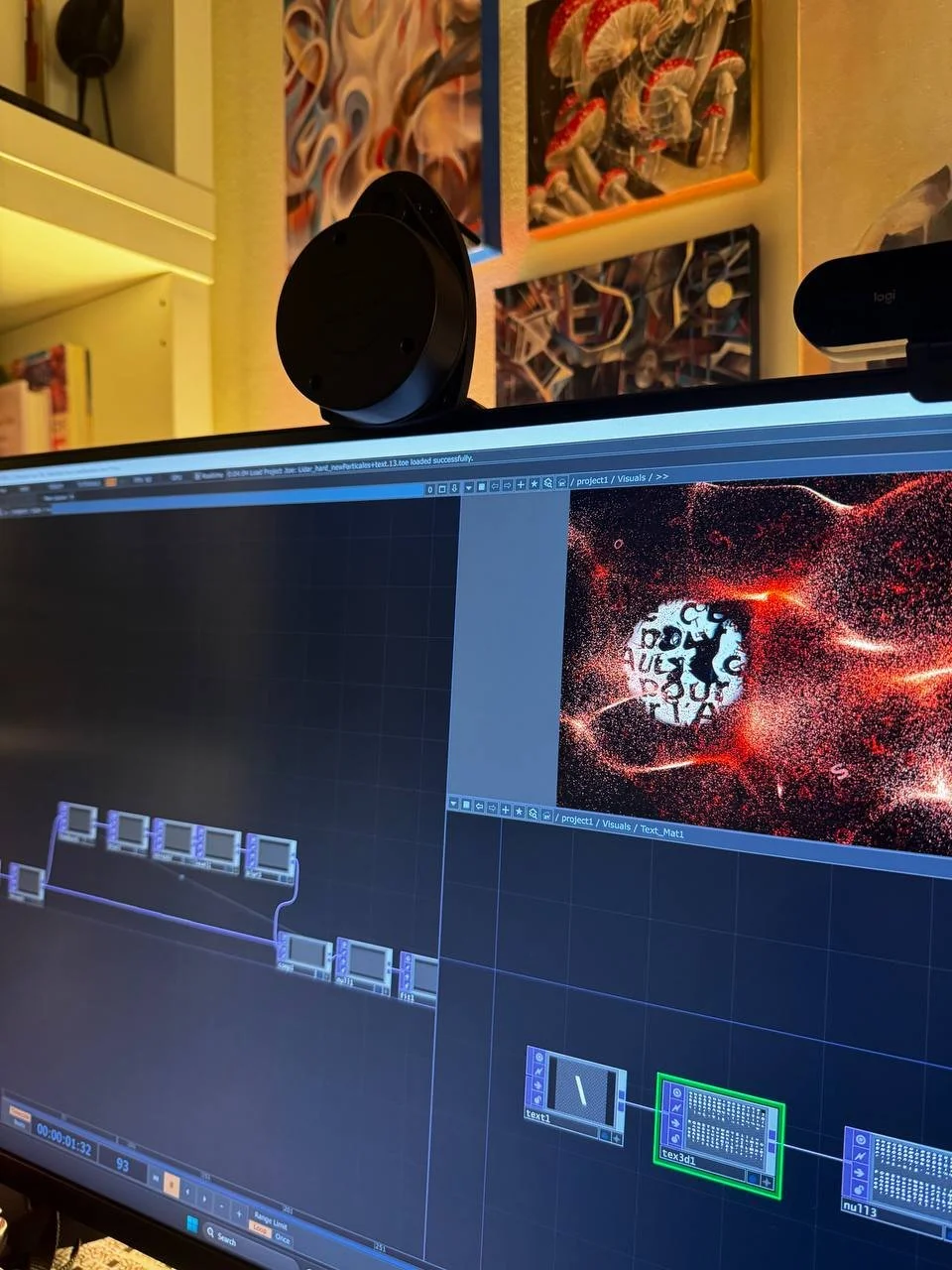
This installation was originally designed for a large public space with a touch-sensitive or LiDAR-enabled screen. At home, it is practically impossible to fully reproduce the intended setup. For demonstration purposes, I recreated the core functionality using my regular computer monitor, temporarily turning it into a touch interface by mounting a LiDAR sensor above the screen. This allowed me to simulate the interaction mechanics on a smaller scale and practice sensor calibration and software logic.
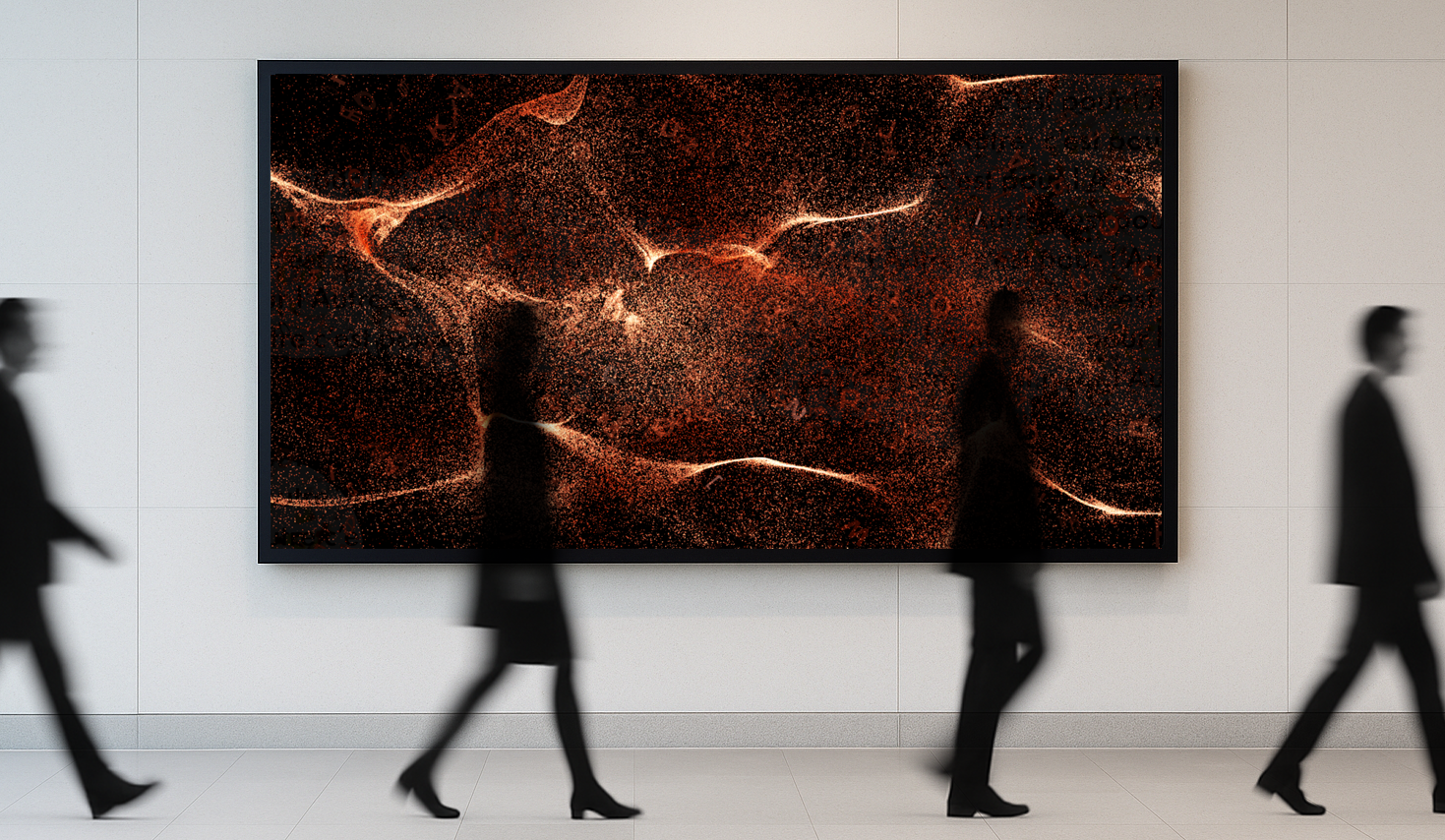
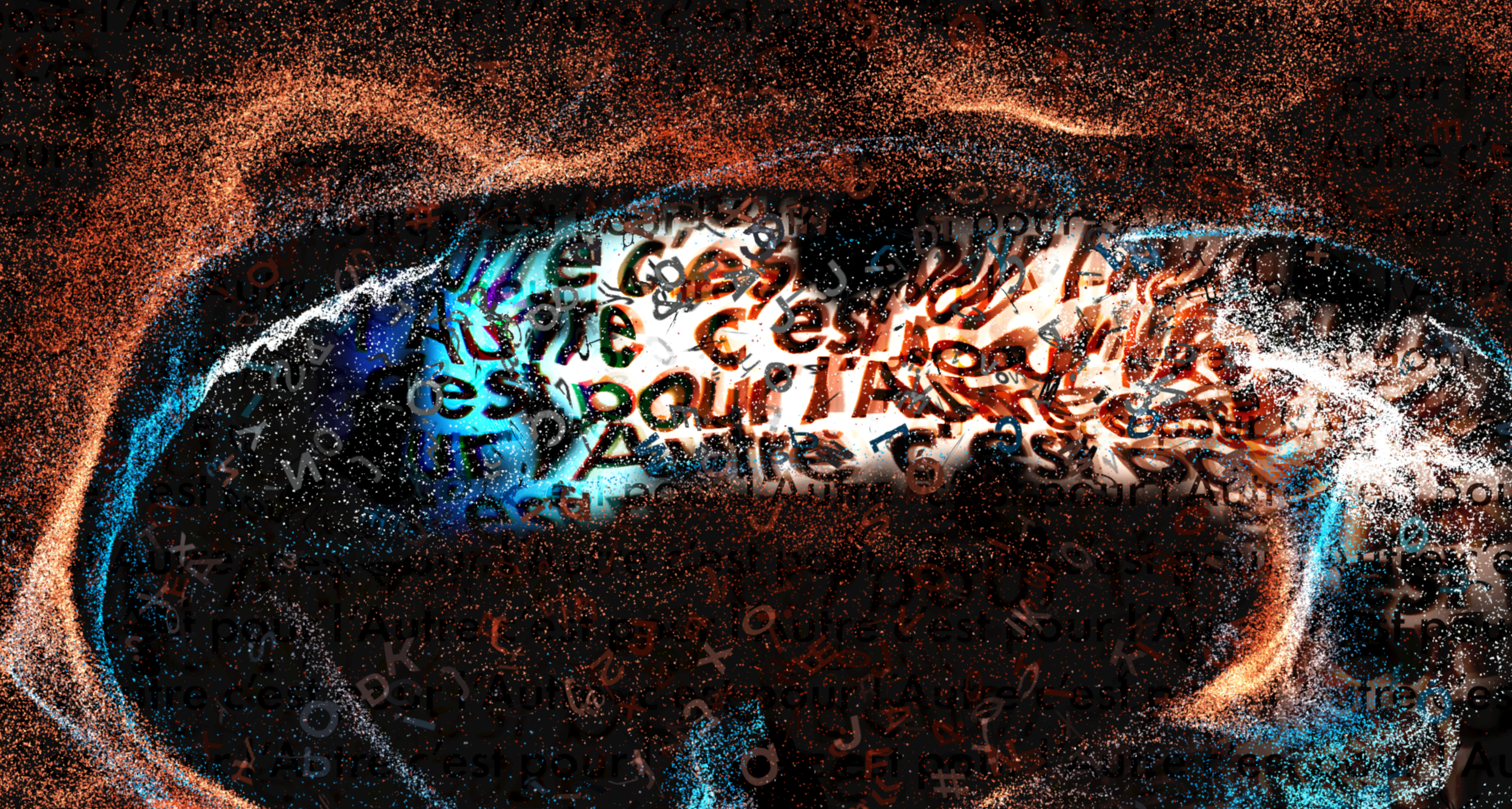
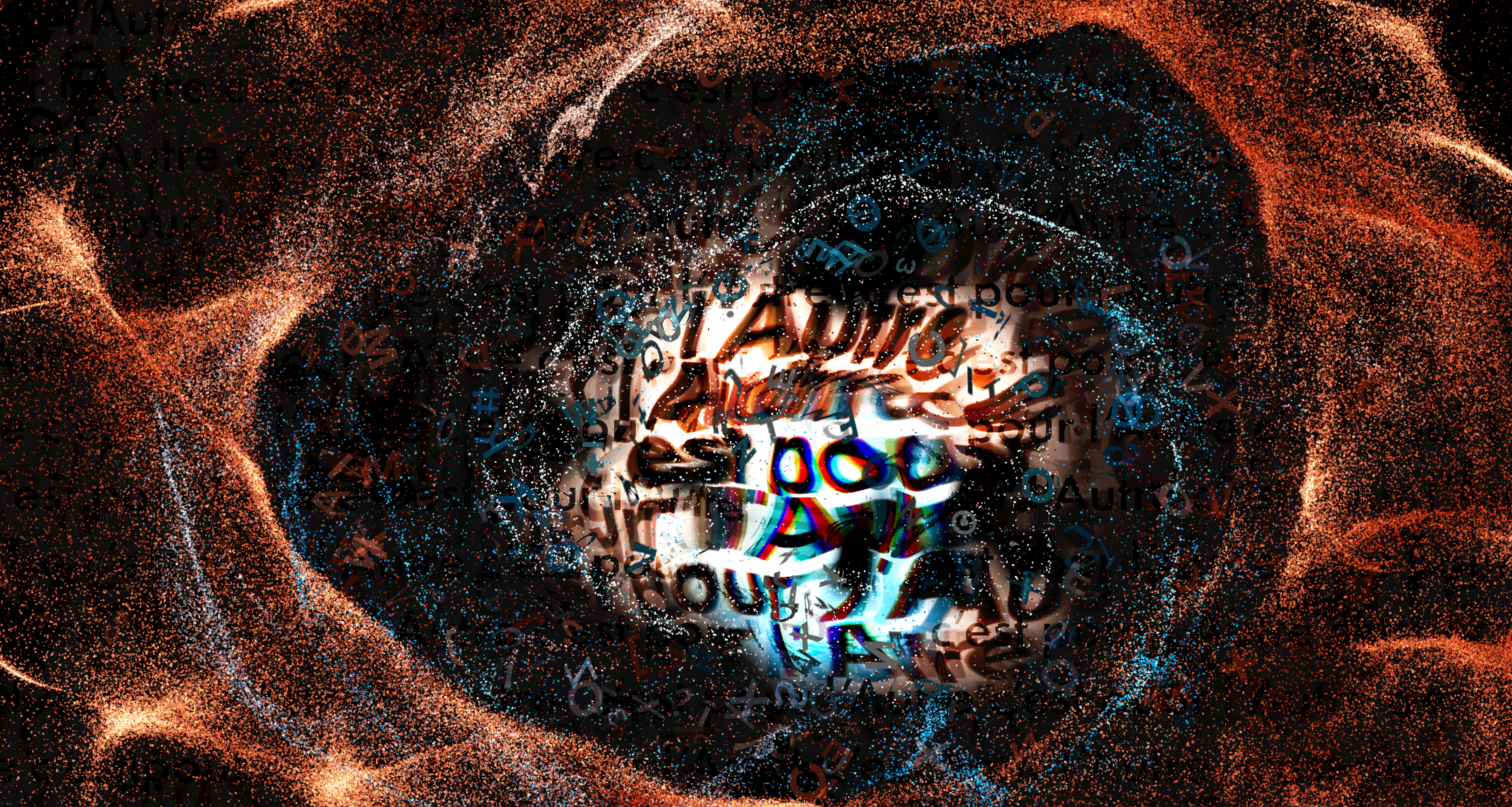
This installation is intended for placement in a public space without prior explanation or instruction. The scene consists of an interactive screen, or a surface equipped with a LiDAR sensor, where in its resting state there is a field of particles and letters that forms neither a message nor an image. A subject passing by may choose not to engage, thereby not becoming its addressee. But the one who pauses and performs a minimal gesture, by touching the surface, allows for the possibility that the object might be directed toward them. Yet this gesture, which may appear to the subject as their own initiative, already contains an error. A local touch produces a rupture in the surface of particles and reveals a small fragment of text that is not given immediately and, at a single point of contact, remains devoid of meaning, presenting only scraps of a message. At this stage the subject may believe that the system is responding to their action and forming an image in direct dependence on their decision. In return they receive exactly as much as fits beneath their hand, and to read the phrase they must continue moving across the surface in order to reveal the full statement. This logic reproduces the relation described by Lacan: the subject does not possess the signifier, they move along the chain, they read it only through the act of moving, and meaning emerges solely as an effect of this passage. Here the subject’s initial certainty is brought into question. The phrase they eventually read states: c’est pour l’Autre — “for the Other.”
This is not a message indicating that the object is meant for someone else in the everyday sense, but a marker that the subject is mistaken on two levels at once: in assuming the address was directed at them, and in taking the desire to engage as “their own.” The gesture in which they would expect confirmation of their position as addressee, for example, as the one who receives a small portion of pleasure or judges the work of the artist,leads to the opposite: it is presented to them that this gesture was nothing other than a response to a demand that arises not from the object and not from the artist, but from the structural place of the Other.
Touchdesigner setup
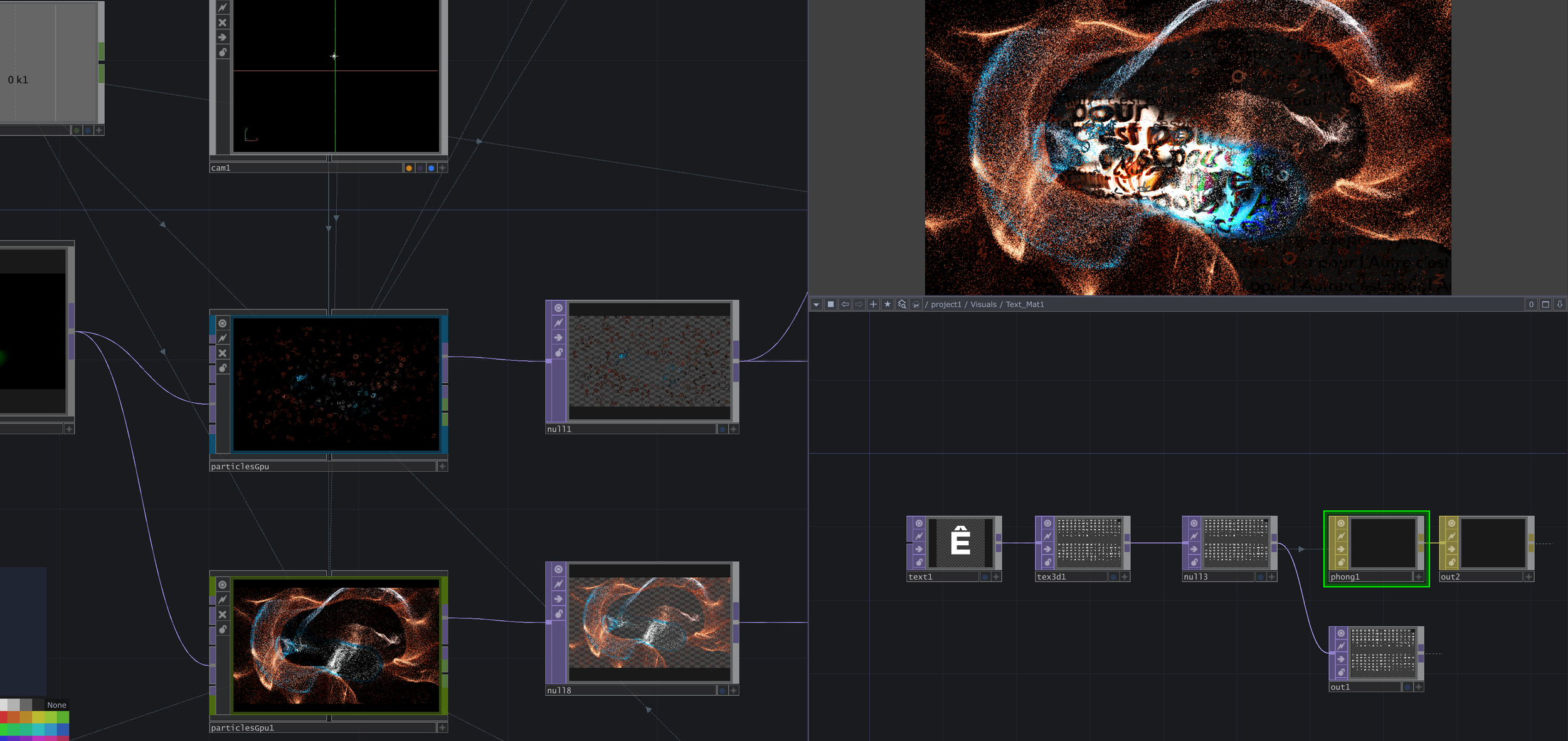
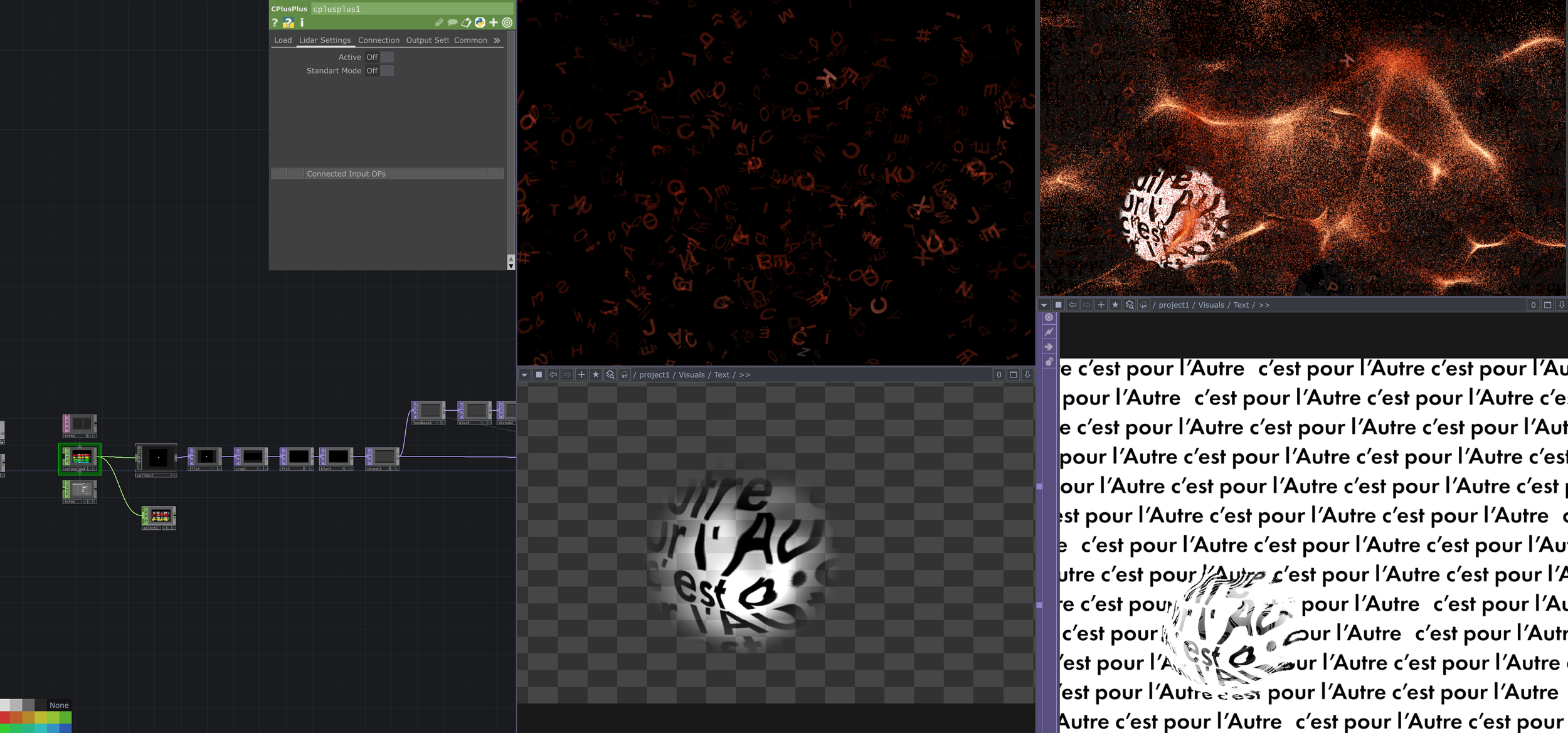
The setup for the installation was built fully in TouchDesigner, with LiDAR used as the primary input, though the system can operate with other types of input as well. The main composition is a combination of two particle systems: a regular particle simulation with different forces, and another system where each particle represents a letter. The raw LiDAR input tends to break into rigid, discontinuous points; to achieve a smoother response, the sensor data is passed through an additional feedback process, allowing the gesture to appear as a continuous movement rather than a series of isolated contacts. This reveals an underlying layer of text lines moving in different directions, at different speeds and with different displacements, producing the desired appearance.
The installation does not reject the subject or refuse their gesture. It creates a situation in which the split between the act and its ground becomes visible. In this work the addressee is always absent, and any attempt to locate one produces only a sequence of questions.